Effets de la COVID-19 sur les ménages agricoles et ruraux du Sénégal
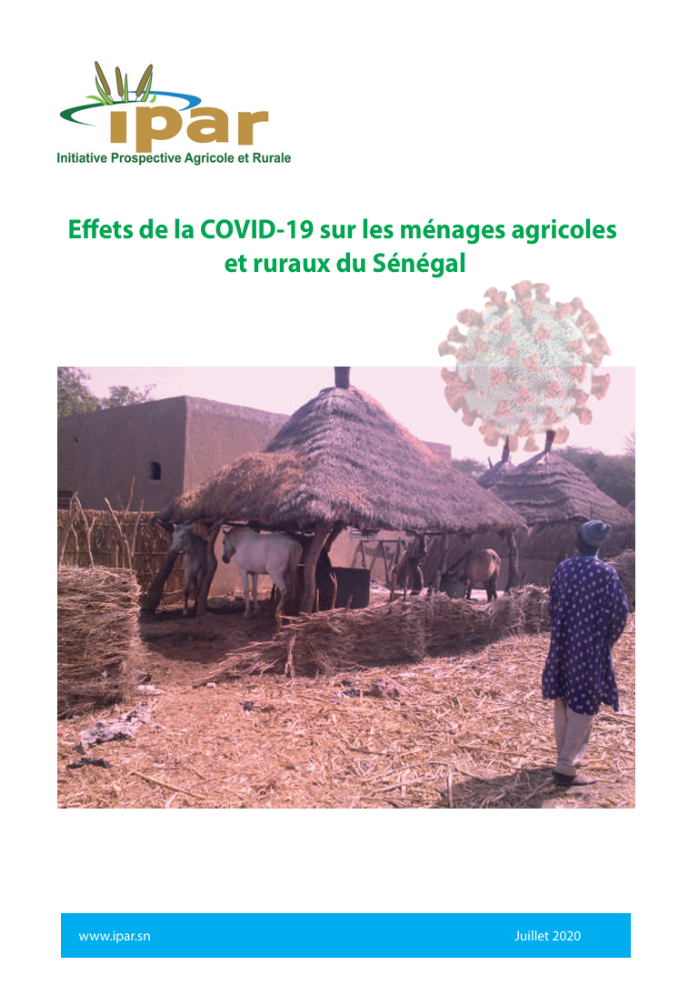
es résultats font apparaître des différences majeures dans la manière dont la Covid-19 et les mesures de confinement affectent l’existence des ménages ruraux. Ils révèlent que la disponibilité et l’accès aux céréales de base (riz, mil, maïs) ainsi qu’aux autres produits de premières nécessités (huile, sucre, poisson, viande, lait) n’ont pas été perturbés pour la […]
6ème débat sur les effets du covid-19 sur l’aviculture au Sénégal

Depuis plus d’une décennie, la filière Avicole Sénégalaise a fait de réels progrès, et suscite beaucoup d’espoir en terme de création d’emploi, de réduction de la pauvreté. Elle constitue pour les populations une source de protéine animal à leur portée et à moindre coût. L’aviculture Sénégalaise est marquée par des investissements conséquents depuis 2005, suite […]
4e Débat d’experts paysans sur les effets du COVID-19 – Mbass mi ak Mbay mi

Thème : COVID 19 et risques liés à l’octroi des licences dans le secteur de la pêche.Quand : samedi 30 Mai 2020 de 10h à 13h30 A l’instar des autres secteurs, la pêche est aussi fortement impactée par les mesures prises par les autorités pour limiter la propagation de la pandémie de Covid-19. Avec la fermeture ou […]
4e Débat d’experts paysans sur les effets du COVID-19 – Mbass mi ak Mbay mi

Thème : COVID 19 et risques liés à l’octroi des licences dans le secteur de la pêche. Quand : samedi 30 Mai 2020 de 10h à 13h30 A l’instar des autres secteurs, la pêche est aussi fortement impactée par les mesures prises par les autorités pour limiter la propagation de la pandémie de Covid-19. Avec la fermeture ou […]
Deuxième rapport d’examen biennal delà commission de l’union africaine sur la mise en œuvre de la déclaration de Malabo sur la croissance et la transformation accélérées de l’agriculture pour une prospérité partagée et de meilleures conditions de vie
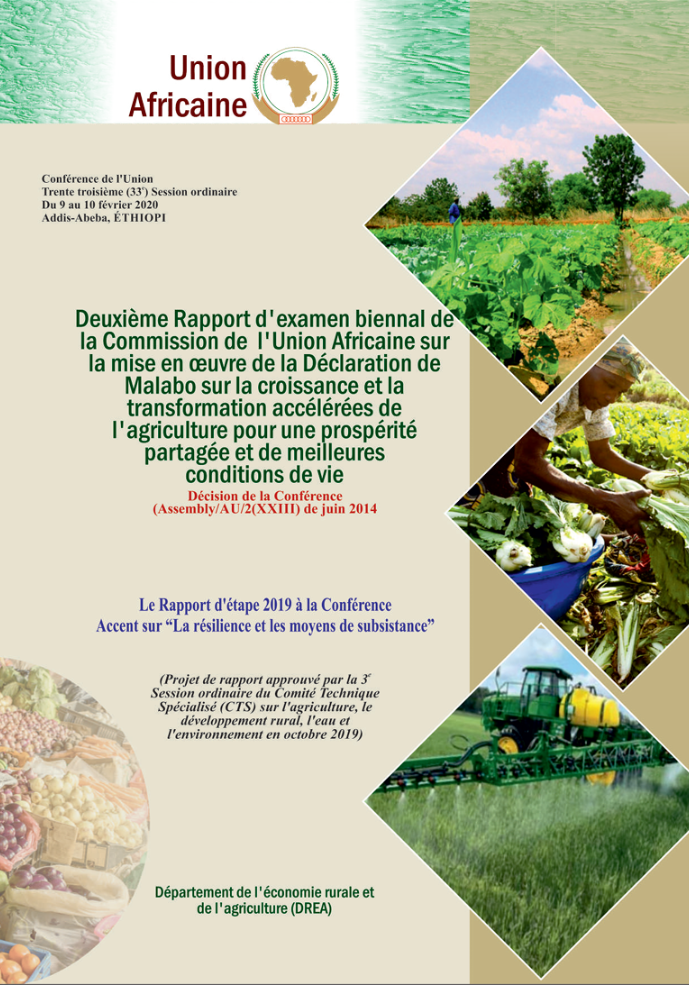
Le présent document est le deuxième rapport d’examen biennal sur les progrès réalisés dans la mise en œuvre du Programme détaillé pour le développement de l’agriculture africaine (PDDAA) par le biais de la Déclaration de Malabo sur “L’accélération de la croissance et de la transformation de l’agriculture en Afrique pour une prospérité partagée et de […]
COVID-19 et vulnérabilité alimentaire des ménages : rôle du programme d’aide alimentaire de l’état sénégalais
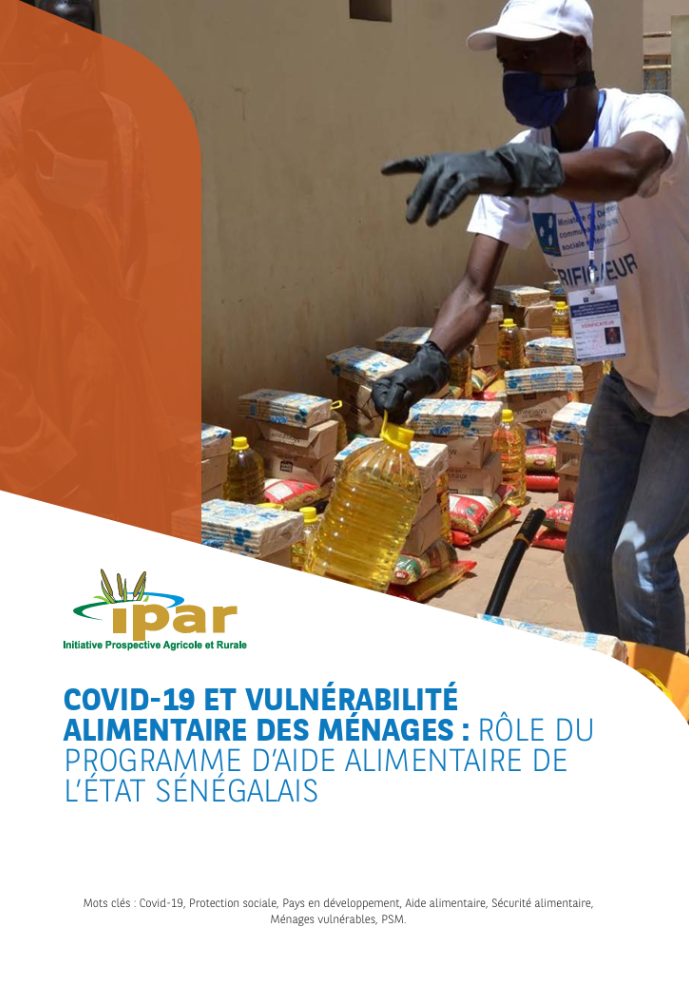
Depuis décembre 2019, le monde subit une crise sanitaire qui a eu des répercussions économiques et sociales sans précédent. Dans une économie comme le Sénégal, dominée par le secteur informel, la politique du « rester chez soi » a provoqué une dégradation de la situation économique et alimentaire des couches les plus vulnérables. De ce […]
2ème Débat d’experts paysans sur les impacts du COVID-19 Mbass mi ak Mbay mi
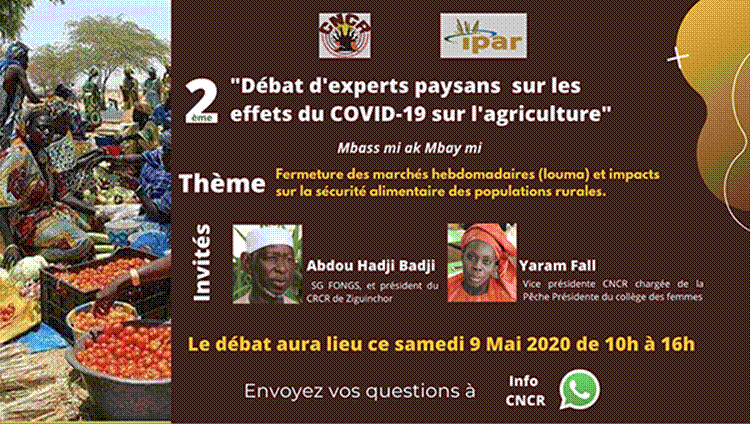
Thème : Fermeture des marchés hebdomadaires (loumas) et impacts sur la sécurité alimentaire des populations rurales. La COVID-19 constitue pour l’humanité un choc majeur sur les plans sanitaires et économiques. A l’instar des autres pays du monde, le Sénégal a pris des mesures de distanciation sociale pour limiter la propagation de la pandémie. L’aide alimentaire octroyée […]
2ème Débat d’experts paysans sur les impacts du COVID-19 Mbass mi ak Mbay mi
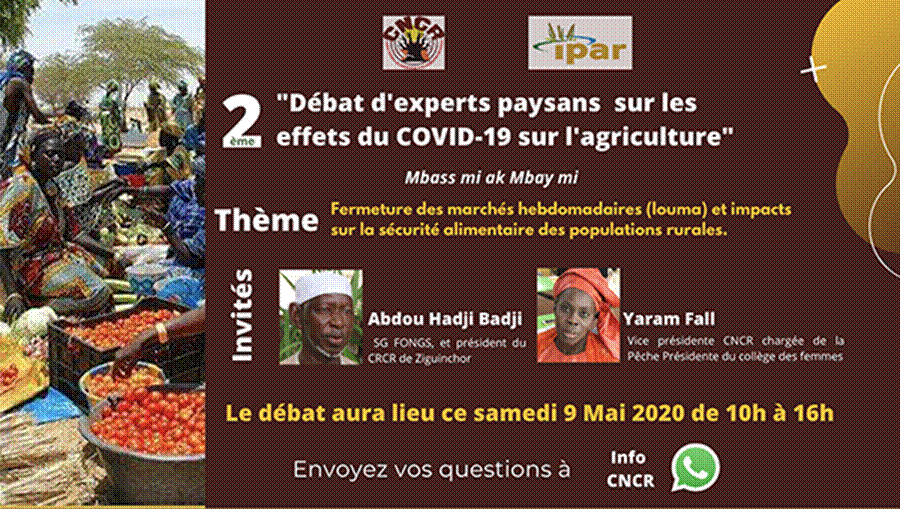
Thème : Fermeture des marchés hebdomadaires (loumas) et impacts sur la sécurité alimentaire des populations rurales. 2ème Débat d’experts paysans sur les impacts du COVID-19 Mbass mi ak Mbay mi La COVID-19 constitue pour l’humanité un choc majeur sur les plans sanitaires et économiques. A l’instar des autres pays du monde, le Sénégal a pris des […]
L’ivret d’information sur : les procédures d’accès et les droits d’usage sur les terres des domaines national et de l’etat
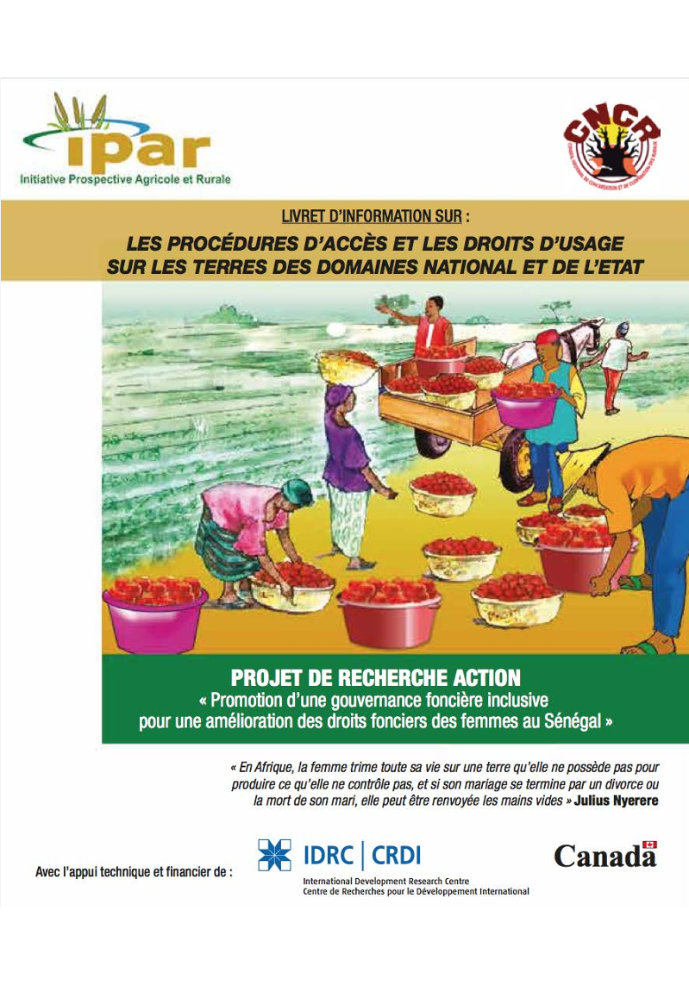
La problématique de l’accès et du contrôle par les femmes sur les ressources foncières a toujours été l’un des défis majeurs auxquels le Sénégal fait face, malgré que notre pays ait consacré dans sa Constitution le principe d’égalité en matière d’accès à la terre, reconnaissant les mêmes droits aux femmes au même titre que les […]
Projet de recherche – action
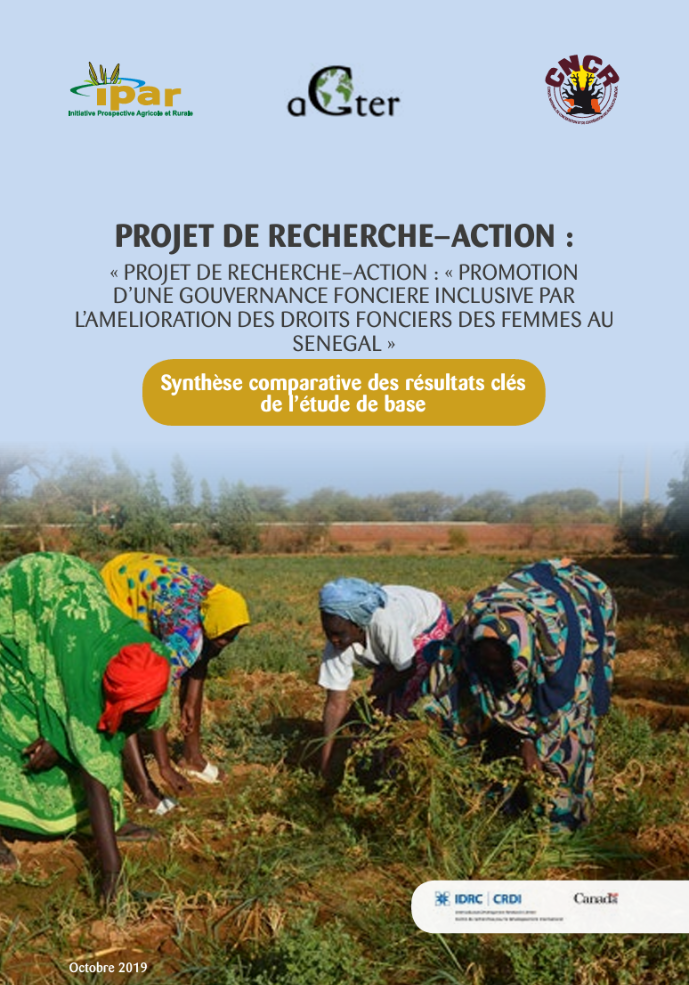
PROMOTION D’UNE GOUVERNANCE FONCIERE INCLUSIVE PAR L’AMELIORATION DES DROITS FONCIERS DES FEMMES AU SENEGAL » Depuis le début des années 2000, le Sénégal, à l’instar de la plupart des pays du Sud, est confronté à une demande de terres particulièrement forte, aussi bien sur les terres pluviales qu’irriguées, situées sur le domaine national comme sur […]